
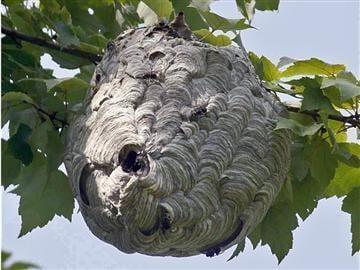
How to safely remove unwanted bees and hornets' nests
Would you like more information about bees or hornet nest removal?
Send us your questions about bees or hornet nests or any other pest control related question(s) and we will reach out to one of our Resident
Pest Control Experts for you!
How and what is the best time to remove bees and hornet nests and stay safe doing it?
The most efficient way to eliminate bees and hornet nests is to wait until after dark when most if not all the hornets have returned to the nest; then spray a good dose of registered wasp/ hornet spray into the opening. Also, before daylight in early morning works well and there is less chance of becoming stung.
Ground nesting bees can be controlled the same way, just aim the spray nozzle toward the ground. Ground nests can be more tricky due to nests being a foot or more in diameter.
Cygon 2-E, Orthene diazinon, or Sevin could be applied more effectively in this situation. Purchasing store bought sprays like Raid for bees and hornets can be effective if used according to the can´s directions.
A non-chemical control would be to wait until fall or winter and physically destroy the nest. Wasps will continue to use the same nest enlarging it more every year.
It is important to note that wasps, hornets, and bees are extremely beneficial creatures and control should be targeted only to problem areas. They are merely doing what most species do in warding off possible danger to their family and nest.
Always, while attempting to remove nests that could be dangerous to your family and guests, you should exercise caution. Some nests may require calling in a professional "bee man," or pest control expert. Especially, if you are allergic or someone close by has allergic tendencies, you should be careful and call upon a professional when needed.